


A Modern Duchess: Zinnie Harris’ Timely Revival of Webster’s Classic with Jodie Whittaker
Lyn Gardner examines this acclaimed contemporary adaptation, returning to the stage for the first time in over a decade.

She stands before us, aflame in a red dress, singing a torch song. She’s a modern woman, cool, comfortable in her own skin, in control, and sure of what she wants. So began Zinnie Harris’ 2019 Royal Lyceum production of The Duchess, a contemporary adaptation of John Webster’s 1614 Jacobean revenge tragedy, The Duchess of Malfi.
Later this year, Harris will be restaging her play at Trafalgar Theatre, with former Doctor Who Jodie Whittaker playing the woman who confidently declares, “I am utterly and always myself.” But that confidence and determination to make her own choices unbeholden to others, particularly men, puts her on a collision course with those around her who are determined to control her. It may seem strange that Harris has looked to a play written 500 years ago to interrogate patriarchal attitudes and coercive control today, but as Harris remarked in an interview in 2019, “Webster was a proto-feminist ahead of his time who says ‘we control and destroy women at our peril.’”
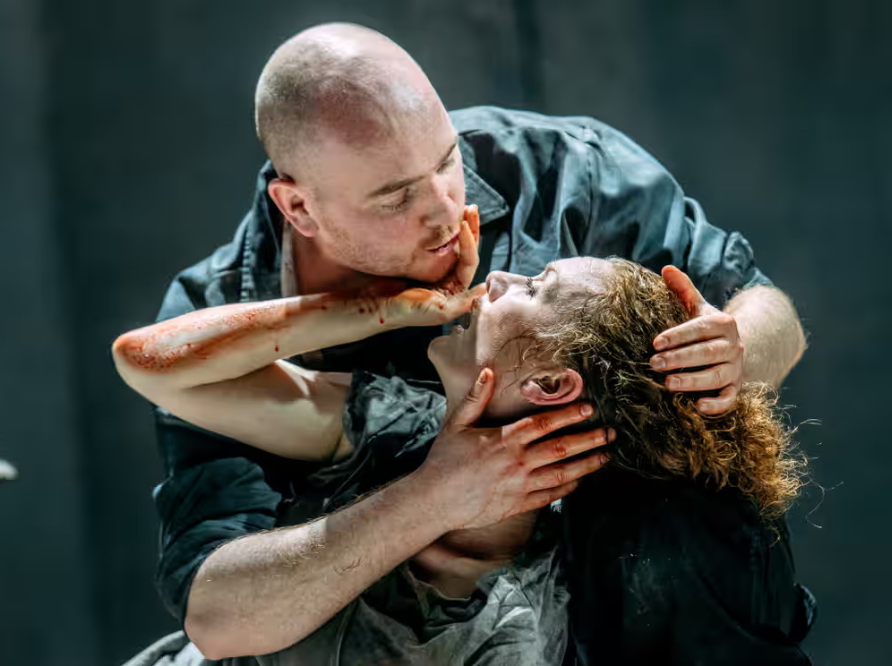 Adam Best as Bosola and Kirsty Stuart as The Duchess in the 2019 production. Photo by Mihaela Bodlovic.
The plot of Harris’ reworking of John Webster’s play pretty much follows the original, itself based on the true story of Giovanna d'Aragona, who, at the age of 12 in 1490, was married off to the Duke of Amalfi. Giovanna was widowed at 19 and subsequently secretly married her major-domo, Antonio, and had children with him. When the marriage was discovered by the Duchess’ brothers, the family fled, but the Duchess and her children were captured and disappeared into captivity, never to be seen or heard of again. Not long after, Antonio was murdered.
Webster, born 16 years after Shakespeare, was unusual in that the protagonists of his two best-known plays, The White Devil and The Duchess of Malfi, are both women. In taking on the role of the Duchess, albeit in a modernised version, Whittaker is following in the footsteps of some of the greatest actresses, from Peggy Ashcroft to Juliet Stevenson and Judi Dench to Helen Mirren. Eve Best, who played the role for Jamie Lloyd in a revival at the Old Vic in 2012, declared that performing the play was like “learning to eat with a chainsaw.” Maria Aberg’s 2019 RSC revival was so blood-soaked that those in the front rows were offered raincoats to protect them from being sprayed by stage blood.
Not for nothing did T.S. Eliot argue that Webster, whose plays were some of the first written for indoor theatres and would have been lit by shadow-throwing candles, was “much possessed by death” and “saw the skull beneath the skin.” The Duchess of Malfi is a charnel house of a drama in which the body count is exceptionally high. There are severed limbs, wax effigies, incest, poisonings, strangulation, and lycanthropy.
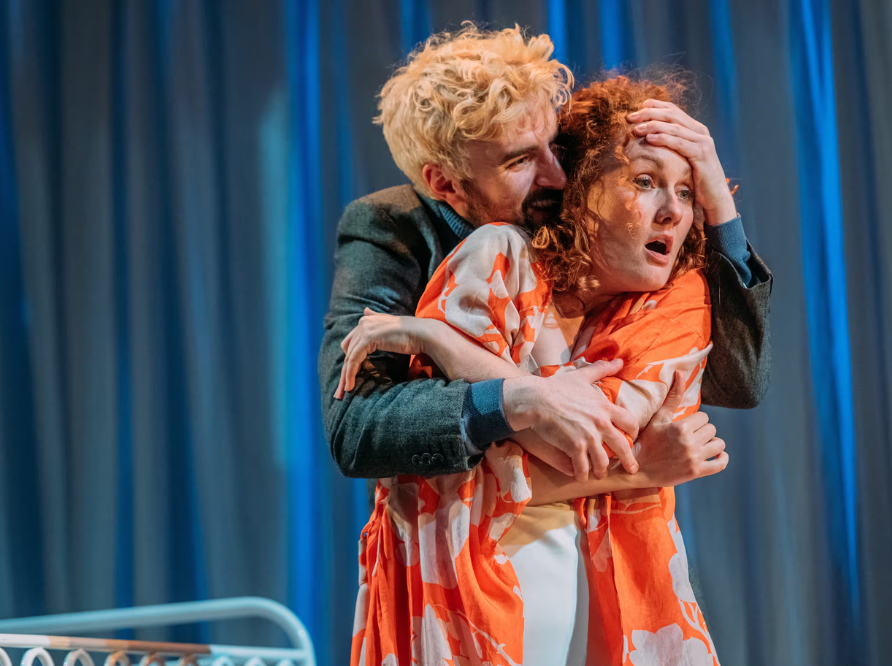 Angus Miller as Ferdinand and Kirsty Stuart as The Duchess in the 2019 production. Photo by Mihaela Bodlovic.
Webster’s obsession with death is brilliantly parodied in the movie Shakespeare in Love, in which Shakespeare encounters a young John Webster delighting in feeding live mice to a cat and expressing his pleasure in seeing Shakespeare’s goriest drama, Titus Andronicus. “Plenty of blood! That’s the only writing,” declares the young Webster enthusiastically, as if already limbering up for his own writing career.
Some have argued that Webster’s plotting demonstrates shades of sadism, but others, including Harris, argue that The Duchess of Malfi offers a striking reminder of patriarchal attempts at coercive control and a searing portrait of “male rage at female empowerment." Harris’ Royal Lyceum production found interesting ways to frame the violence, and she is sure to do so this time around too.
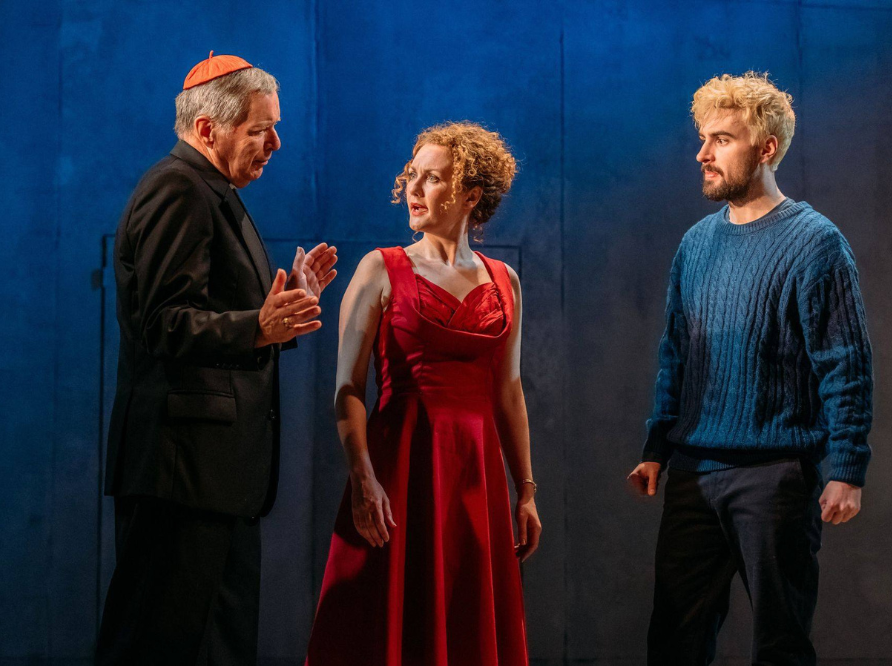 Kirsty Stuart as The Duchess, George Costigan as The Cardinal and Angus Miller as Ferdinand in the 2019 production. Photo by Mihaela Bodlovic.
We may well think that our darkest desires and attitudes towards women are very different from those that drive the characters in Webster’s play, and that we are far more enlightened and liberal about gender roles than those who lived 500 years ago. But one of the reasons this play—which walks the tightrope between the macabrely comic and the tragically serious—has survived so long is because, for all its outlandish plotting, it also has real psychological acuity and reflects both its own time and ours in the way it explores male violence and the price women pay for independence.
Harris’ premiere of her version of The Duchess took place in 2019. Since then, we have been shocked by a number of cases in which women, comfortable in their own skins, who are living their lives to the full and in their own way, have been killed by men. When Harris’ The Duchess is revived with Jodie Whittaker, it is likely to prove that Webster’s play was not just of its time but for our time too.
Cover photo from The Duchess, coming to the Trafalgar Theatre in October 2024. Book your tickets here.


