


Game On: The Habits Brings Dungeons & Dragons to the Stage
Lyn Gardner catches up with Jack Bradfield before his debut play opens at the Hampstead Theatre

Playwright Jack Bradfield wasn’t a keen Dungeons and Dragons player when he started listening to a podcast of RPG live play sessions of the fantasy game made by a company of actors called Critical Role. He was hooked.
“It’s like listening to an improvised radio play or a form of shared storytelling, and as you listen, you get to know the characters the actors are playing and who they are out of the game, and the boundaries between fantasy and reality become more and more permeable. I found that really interesting.”
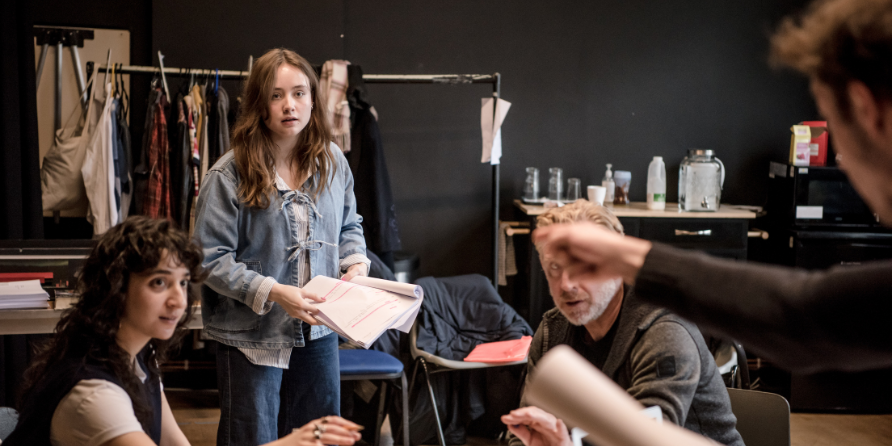 Inside The Habits' rehearsal room, photo by Genevieve Girling.
He began thinking about writing a play set during a game of Dungeons and Dragons, in which the audience would experience the story as though they had double vision because they would see it both through the characters and the roles they played within an unfolding game. Bradfield realised that the idea had legs when he was talking to some friends who lived in a shared household and who were avid Dungeons and Dragons' players.
“They told me that their arguments about the washing up or the rent found their way into the game, and those tensions were aired in that space. One person said that they had worked through their father issues through playing the game. It was a real spark moment when I went, ‘There is definitely a play in that.’.”
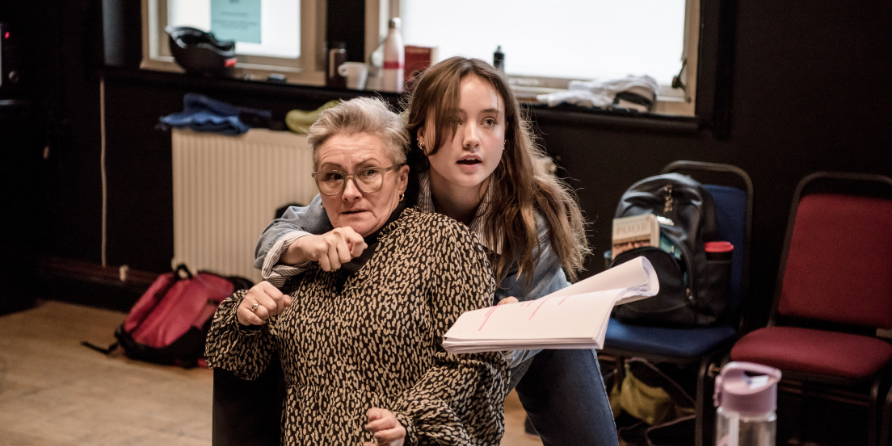 Inside The Habits' rehearsal room, photo by Genevieve Girling.
That play, The Habits, opens at Hampstead Theatre at the end of the month. Set in a board games café, WarBoar, in Bromley, it brings together five people from different generations who are playing a long-running game of Dungeons and Dragonss. Their connections outside the game only gradually emerge. As they do, the stakes in the game become ever higher for both the characters, the characters they inhabit in the game, and for the audience watching. Reading it, I was reminded of Gabrielle Zevin’s best-selling novel Tomorrow, and Tomorrow and Tomorrow about the lives and friendship of two video game makers, which riffs on the possibility of storytelling and gaming as a means of finding succour and redemption and dealing with grief and guilt.
Bradfield points out that for many people, gaming in many forms offers an opportunity to take back control and offer the power to change things, a power that they may not feel they possess in the real world.
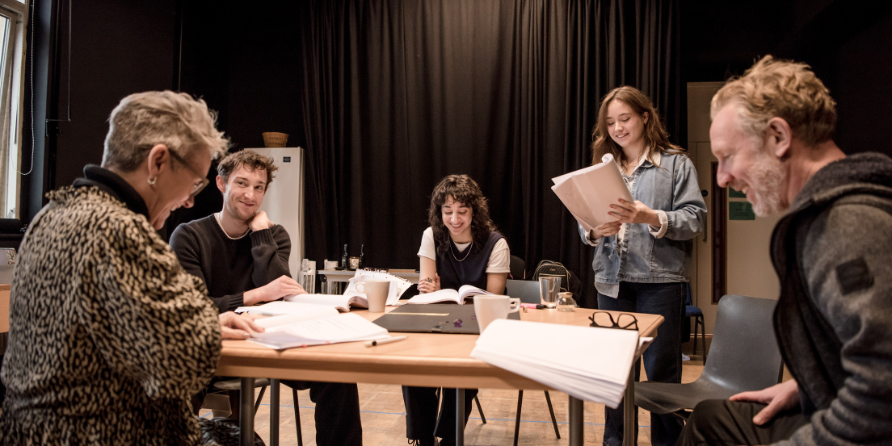 Inside The Habits' rehearsal room, photo by Genevieve Girling.
The cleverness of The Habits is that because the play is simultaneously set in two worlds—the real world and the fantasy world—and the audience knows that they are sitting in a theatre watching a fictional story unfold, the potential is there for us to see with a kind of laser double vision. Text and subtext and the layers within both are magnified as if looking through a prism. No wonder that on the title page of the script, Bradfield quotes his great heroine Ursula K. Le Guin: “For fantasy is true, of course. It isn’t factual, but it’s true.”
Bradfield is best known for his work with Poltergeist Theatre, whose hits include Lights Over a Tesco Car Park, Art Heist, and Alice in Wonderland. This is his debut play and a departure from the way he works with Poltergeist, which is a collaborative venture. Right at the start of any process, a show will have devisers, sound, lighting, and designers in the room workshopping together and feeling their way into creation.
“Often what I am doing is juggling lots of balls, so there has been something liberating and good for me as an artist to sit down and chisel away at one thing until I am really proud of it.” That has taken time. Bradfield began writing The Habits before the pandemic, but it took time to find the right form.
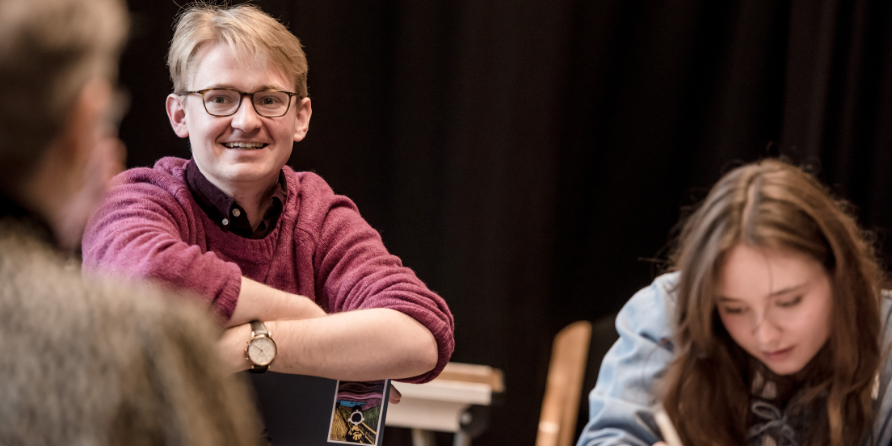 Inside The Habits' rehearsal room, photo by Genevieve Girling.
“There is a version where it is one long scene that plays for an hour and a half, another where there are 52 scenes representing one play session a week over a whole year. Some were more experimental and formally challenging. But in the end, what worked was six scenes in two acts. Just like a normal play. For me, the juicy formal bit is the fact they are playing a game.”
If the characters are all sharply drawn, so too is the location of the piece: it’s set in Bradfield’s home parish, where he grew up: Bromley. Bromley becomes almost a character in the piece, reflecting the fact that it is not just people’s lives that are changed by the vast technological changes that are taking place but also places. Bradfield points out that since the pandemic, RPGs like Dungeons and Dragons have increasingly migrated onto Zoom, an online space where increasingly much of our personal and emotional lives are unfolding too, particularly amongst younger people.
That means places like WarBoar are disappearing, and the face-to-face element of gaming is changing too.
“I think Dungeons and Dragons is best when it is in person. One of the things this play is celebrating is what can happen when people come together and create something together. That’s what happens in theatre too with the audience and the makers. At a time when so many of us are retreating into digital space, coming together in a space is what makes theatre an event and gives it its superpower.”
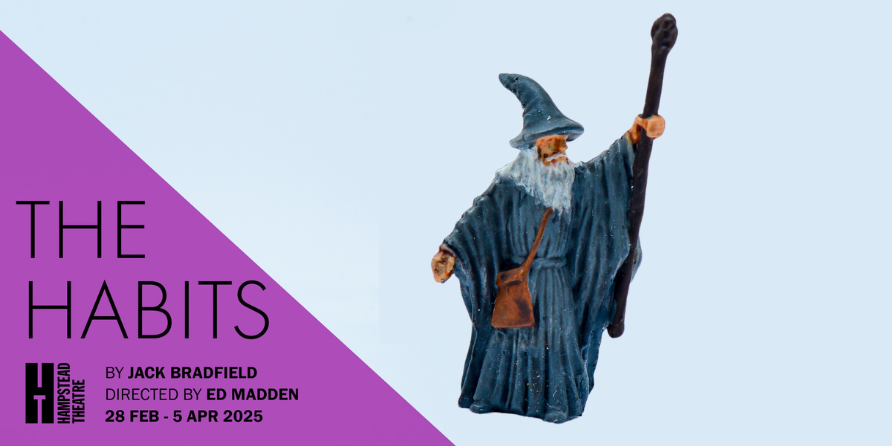
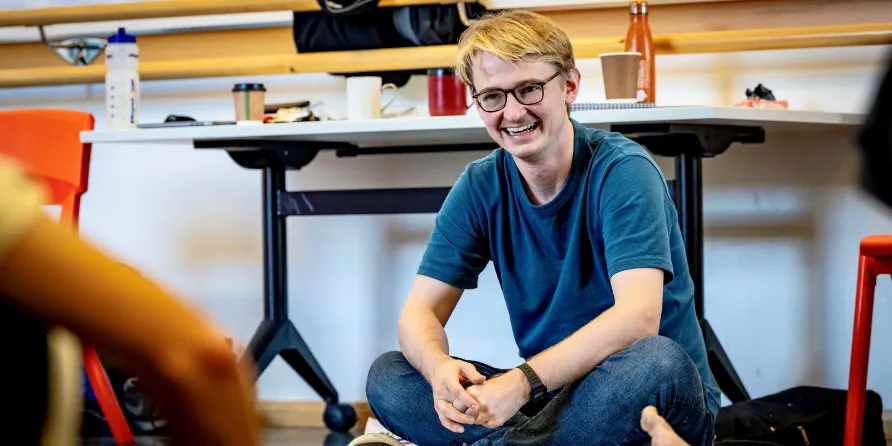
Cover image of Jack Bradfield. The Habits is playing at Hampstead Theatre from 28th Feb to 5th April. Book your tickets here.


