


Lyn Gardner Interviews Sean Holmes
Cowboys, Capulets and Crucibles: Associate Artistic Director Sean Holmes Saddles Up for Summer at the Globe

When I ask Sean Holmes, associate artistic director of Shakespeare’s Globe, whether his revival of Romeo and Juliet, set in the American West, is concept Shakespeare, albeit a bloody good concept, he laughs.
“It is very hard to do concept Shakespeare at the Globe because it’s not a space that lends itself to abstraction and metaphor,” he says. But it is a space which lends itself brilliantly to an exchange between audience and stage and a clarity of storytelling. “To do that, you have to put a concrete world on stage so the audience can really understand the rules of that world.”
Holmes cheerfully admits there is a danger with its American West setting that this Romeo and Juliet could become “gimmicky, you know, all gingham and lassoes and tassels”, but he argues that “it can frame the world in an interesting and refreshing way.”
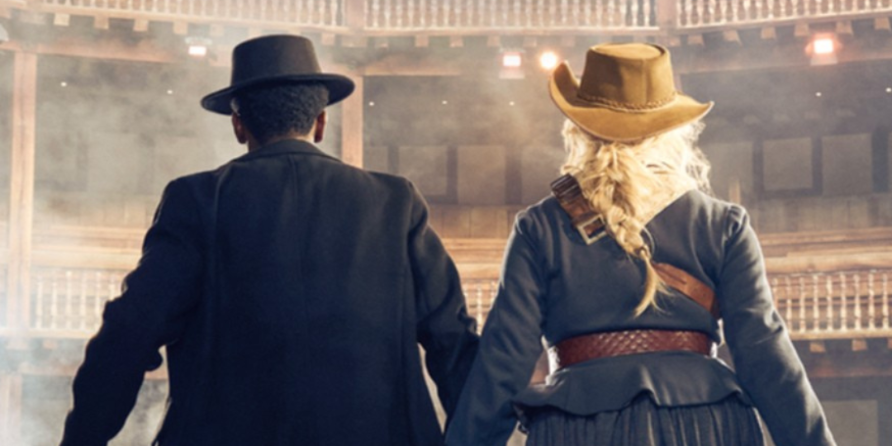 Romeo & Juliet, playing from 25 April.
Holmes, who previously ran the Lyric Hammersmith and now works closely with the Globe’s artistic director, Michelle Terry, who is unusual in being both an actor who appears in the Globe shows and also an AD, says that he was drawn to the American West as a setting for the play because it was a place with strong patriarchal systems that had something performative about the way it foregrounded masculinity and a frontier attitude to justice so that families who are rich and powerful like the Capulets and the Montagues resort quickly to violence to maintain their ascendancy.
“The proof of the pudding will be in the performance, but it feels as if the slightly different, unexpected prism has unlocked the play for us. I thought it was a play I knew inside out, but in rehearsal I found all sorts of odd, weird corners to it.” Romeo and Juliet are often portrayed as victims of society, but Holmes points out that the pair of young lovers are also products of that society. He raises the moment when Romeo (mistakenly) believes that Juliet is dead and how the teenager doesn’t mourn but instantly decides to kill himself. “It’s a play drenched in death and blood, and Romeo and Juliet embrace the eroticism of death, and they are self-dramatising in a way that is really interesting and perhaps reflects our world too.”
Holmes' revival of Romeo and Juliet kicks off a potentially humdinger of a summer season at the Globe, which includes Holmes' own revival of The Merry Wives of Windsor, Ola Ince’s staging of The Crucible, Robin Belfield directing Twelfth Night and Owen Horsley examining the cult of celebrity and male ego through Troilus and Cressida.
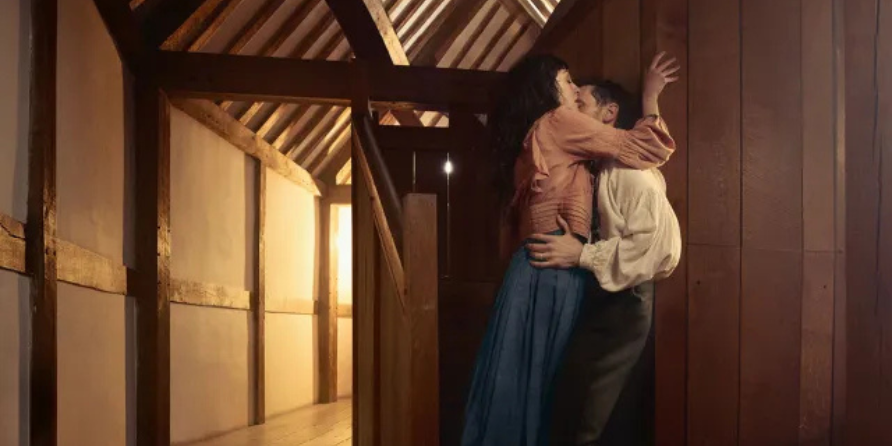 The Crucible, playing from 8 May.
“I think you might say that this is a season in which we are staging the familiar in unfamiliar ways and doing the less familiar in more familiar ways,” muses Holmes. He points to his revival of The Merry Wives of Windsor, which opens in July, a Shakespeare play which has often been treated by directors like a sitcom.
“There’s nothing wrong with that, but maybe there is more to it than first meets the eye. Michelle laid down the provocation that if Shakespeare really is such a great writer, perhaps he put more thought into Merry Wives of Windsor than the critical writing has led us to believe.” Shakespeare legend has it that Queen Elizabeth I loved Falstaff as a character in Henry IV so much that she demanded Shakespeare write another play featuring the boastful knight. So maybe Merry Wives was a piece of hack work for Shakespeare, but if so, one which Holmes believes has hidden depths.
“At the beginning of the play, Falstaff is the hunter. He is in Windsor, and he has killed a deer and is going to sleep with the wives and take all the townspeople’s money. By the end he is metaphorically running around the forest in his underpants with antlers on his head, pursued and tortured by the townspeople. He has become the hunted. There is something mythic and darker running through this play which looks like a social comedy on the surface.”
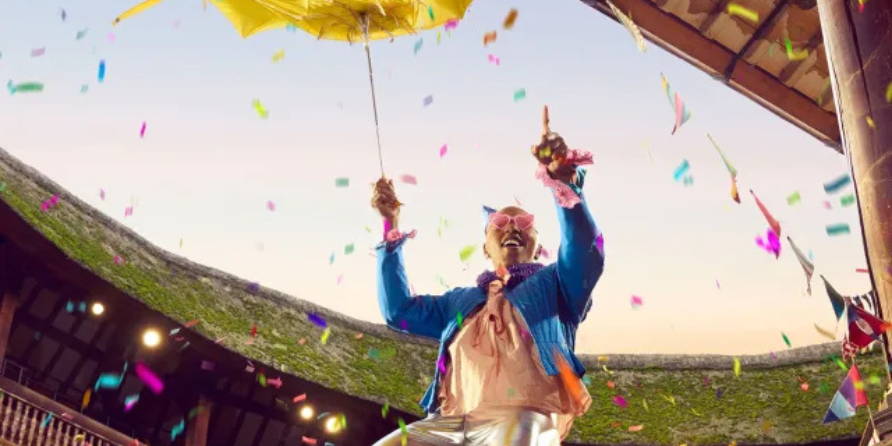 Twelfth Night, playing from 8 August.
At a time when so many theatres are facing a difficult time and are operating under huge financial restraints, the unfunded Shakespeare’s Globe has bounced back from the trials of lockdowns and Covid restrictions far better than many. Last year 51 per cent of tickets cost less than £30, and 75,000 people came to see shows on groundling tickets that anyone can buy for just £5. That alone makes the Globe a democratising force for theatre.
“We are not supported by state subsidy, so every year we have a massive box office target to meet, so we are never complacent, but Michelle’s vision is a programme which is both popular and challenging, and the audience wouldn’t come if they didn’t think we were doing something that feels alive and vibrant and which speaks to the spirit of Shakespeare but which sometimes plays fast and loose with the letter of Shakespeare.”
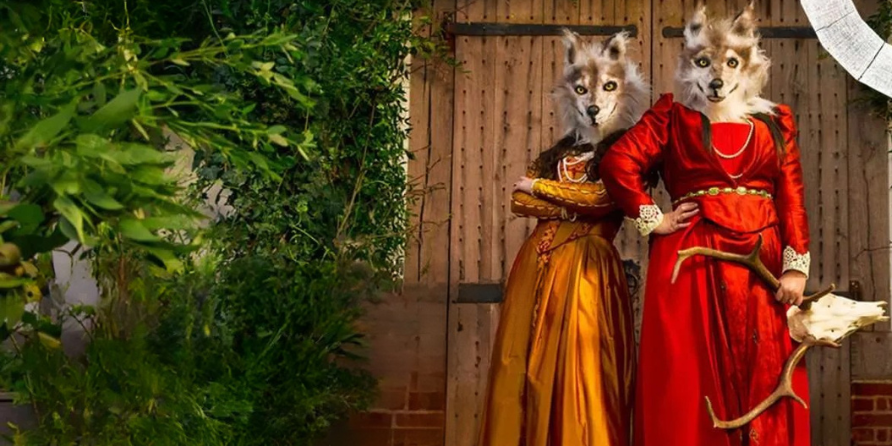 The Merry Wives of Windsor, playing from 4 July.
Yet for all its box office and creative success Holmes accepts there is still “a snobbery” around the Globe – “the idea that we are pursuing some sort of old-fashioned idea of museum Shakespeare. But would the audience come if we were doing that? Would they come back? I don’t think they would if we were not doing something that felt genuinely dynamic.”
The Globe audience is made up of seasoned theatre-goers, Shakespeare lovers, schoolchildren and tourists. Holmes reckons that it is the presence of the latter that attracts some of the snobbery but is quick to point out that tourists are just people from all over the world, and in an increasingly atomised and nationalistic world, coming together in a shared space to engage with Shakespeare and theatre can only be a welcome thing. “When I was running the Lyric Hammersmith, I would have bitten off your arm for more tourists spending money at my theatre.”
This season marks a first for the Globe: the programming of a mid-20th-century play on the theatre’s stage. The Crucible, Arthur Miller’s knotty, challenging play about the Salem Witch Trials, which was written in response to the tide of McCarthyism sweeping the US in the 1950s, was programmed before Trump won his second term in the White House. But Holmes says, “It is beginning to feel more relevant by the day with what is happening in the US at the moment and the attacks on universities like Harvard and civil liberties.” It is hard to disagree.
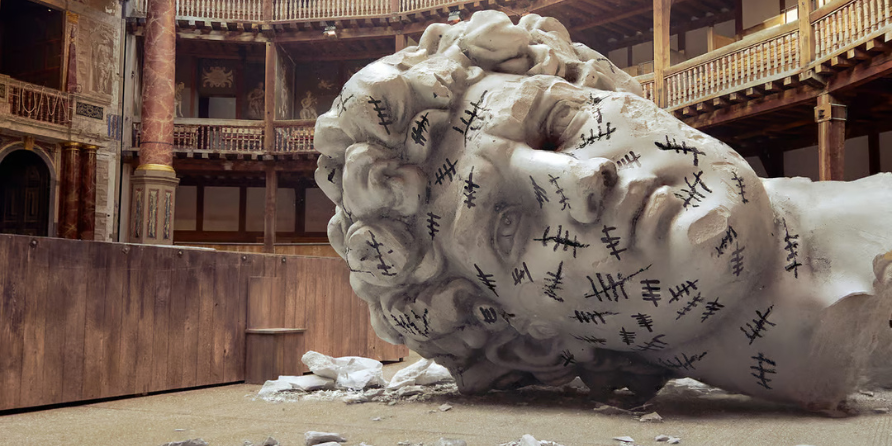 Troilus and Cressida, playing from 26 September.
The play also has a poignant connection to the Globe. Sam Wanamaker, the American actor and director who dedicated so much of his life to getting the replica of Shakespeare’s theatre built on the South Bank and without whom it wouldn’t exist, only decided to take up residence in the UK in 1952 because he knew that if he returned to the US, he was likely to be caught in the net of the McCarthy witch trails which was riding a wave of anti-communist sentiment. So, Wanamaker stayed and campaigned tirelessly to build the theatre. Often against the odds.
The result? A theatre which offers a unique space and an utterly unique dynamic between audience and stage. “On a good day, 3,000 people come and have a transformative experience together.” What’s not to like about that?
Cover image of Shakespeare's Globe. The summer season runs April to October. Browse and book all shows here.


